
Every consumer knows polyurethane foam, right? After all, it’s in everything from our mattresses and sofas to car seats and coffee cups.
But that’s not exactly accurate. The polyurethane foam innovations built into today’s mattresses aren’t meant for cars or couches. They are designed exclusively for consumers who want a comfortable, supportive night’s sleep.
It’s up to the industry, including frontline retail sales associates, to educate consumers in foam choices “because they are, for sure, still too confused,” says Ben Ducatteeuw, CEO of Softtex Sleep, the Belgium-based sleep products developer and manufacturer.
“If a person wants to buy a new mattress, they are very interested and they want to have a good mattress within their budget,” he says. “Everybody has their own set of things they are looking for. Everybody understands more and more the importance of a good night’s sleep and a good quality of mattress.”
The benefits of foam
Polyurethane foam can be classified in three types, each with its own qualities and uses.
- Conventional: These decades-old foams remain a mainstay in mattress cores, providing foundational structure and supporting spinal alignment. Their range of firmnesses makes them versatile enough to tackle the diverse preferences of sleepers.
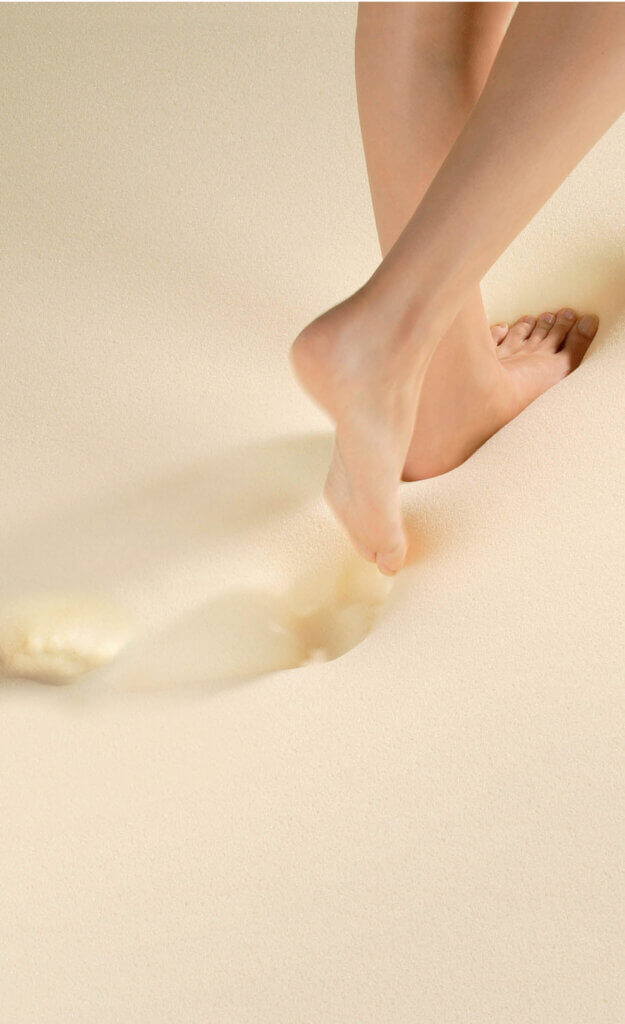
- Viscoelastic: This is the famous “memory foam” that gives top layers their slow recovery, pressure relief, reduced motion transfer, and comfort.
- High-resiliency: If conventional foams are the baby boomers, high-resiliency foams are Gen Z. Like conventional foams, they are typically used for base-level and core support, but through advances in technology and science, they are higher-quality, more durable, and more supportive. High-resiliency foams keep their original shape, recovery, and properties such as breathability and comfort over time.
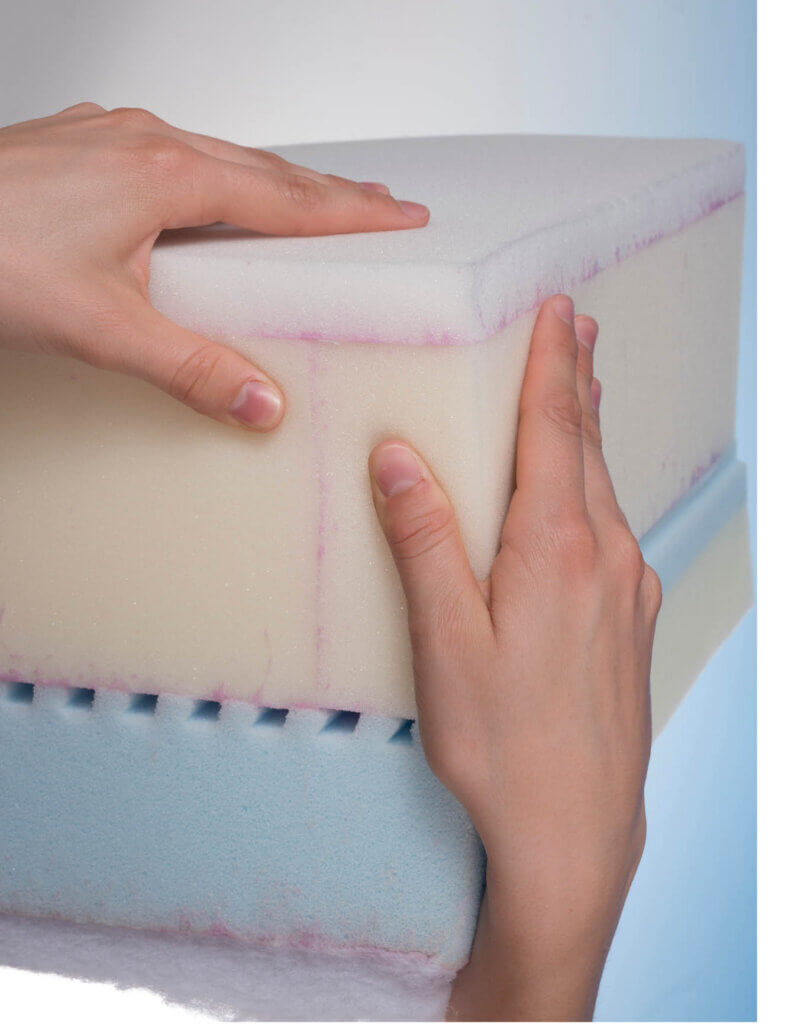
Each type of foam comes in different densities and in firmnesses that range from very soft to extremely firm. Put them all in the toolbox, and mattress makers can tailor a mattress to any preference.
Durability is “one of the most critical attributes” of mattress quality, says Adam Lopez, national sales manager, Carpenter Co. Look for manufacturers that test rigorously for durability meeting or exceeding industry standards.
“A foam may feel excellent on first use, but if it cannot withstand real-world sleep conditions over time, it is not the right choice for its intended application,” Lopez says.
Memory foam remains a great choice for many sleepers, especially those who want to sink into a mattress but see it return to shape night after night, says Ducatteeuw. Good mattresses also remove pressure points, which are often the culprit behind back pain and restless nights, so comfort and support “go hand in hand.”
“If you’re sinking in too much, you need that kind of pushback, as well,” he says.
Foam changes
Rigid polyurethane foams were developed before World War II. In the 1950s, scientists figured out how to make them flexible, and they quickly found their way to mattresses and furniture.
Many traditional foams still work well, but specialty and performance foams have “changed significantly,” says Eric Lonstein, president and CEO, Jeffco Fibres.
“We’ve seen, over the years, innovations in terms of foam’s breathability, foam’s ability to reduce pressure points and offer pressure relief, foam’s ability to be more durable over time,” says Lonstein. “And there are also different types of feels that you can get with foam. Many foams are squishy and soft, but there are slightly different types of feels that can help match different customers’ preferences for comfort.”
The quest for support that keeps the spine in proper alignment helped inspire the “open-cell” foams of today. Unlike foams with closed cells that are blocked off from each other like separate rooms, open cell foams are formed with interconnected air pockets. Freer airflow provides breathability and heat dissipation, and the foam is flexible enough to distribute weight evenly.
Foam density, usually ranging from 1.5 pounds to 8 pounds per square foot, can equate to higher prices and higher quality—but not always. Today’s open-cell foams can be lighter, less dense, and more breathable, and the higher-quality versions are durable enough to resist compression and collapse.
“Much like advancements in electronics, where devices become lighter and smaller while delivering superior performance, polyurethane foam can follow a similar trajectory,” says Lopez.
Height is not always a signifier of quality, says Ducatteeuw. A “good, durable, perfect mattress” depends on foam quality, careful construction, and material combinations that deliver breathability and comfort.
Some buyers might be interested to know that the company with its name on top of the mattress doesn’t necessarily make the foam inside. Instead, the brands learn what customers want and then partner with experts in foam research, development, manufacturing, and fabrication to make it happen.
Softtex produces what Ducatteeuw calls “one of the most breathable foams that is still made on a mass production continuous line.”
“It’s not our aim to start making our own mattresses, because our customers are great in that,” he says. “We try to help our partners to say, ‘This is something that should be accessible for the consumers.’”
Foam innovations
Today’s memory foams have improved from their initial rollout, when consumers loved that delicious sinking feeling but discovered the foams could trap heat and sag over time. With advances in research and development, memory foams “were and still are great products,” says Lopez.
market for bio-based foams.
Carpenter’s Serene® Foam acts like a memory foam, but it is not temperature-sensitive, to provide support, plushness, and comfort all night long. Plus, a 2.5-pound density keeps weight low.
“We have found ways to increase breathability, reduce temperature sensitivity, increase the bounce of the product, speed up recovery time, and make the products more durable at lower product densities or weights,” Lopez says.
In the field of cooling, foams can incorporate coatings, additives, and even graphite technologies to help transfer and dissipate heat. Softtex’s KuhlTexPRO uses a pressure-activated climate-control system to transfer heat away from the body.
Jeffco specializes in combining a wide range of foams with cooling technologies and the right coil type to optimize for comfort and breathability, “which can help a person better regulate their temperature during sleep,” says Lonstein.
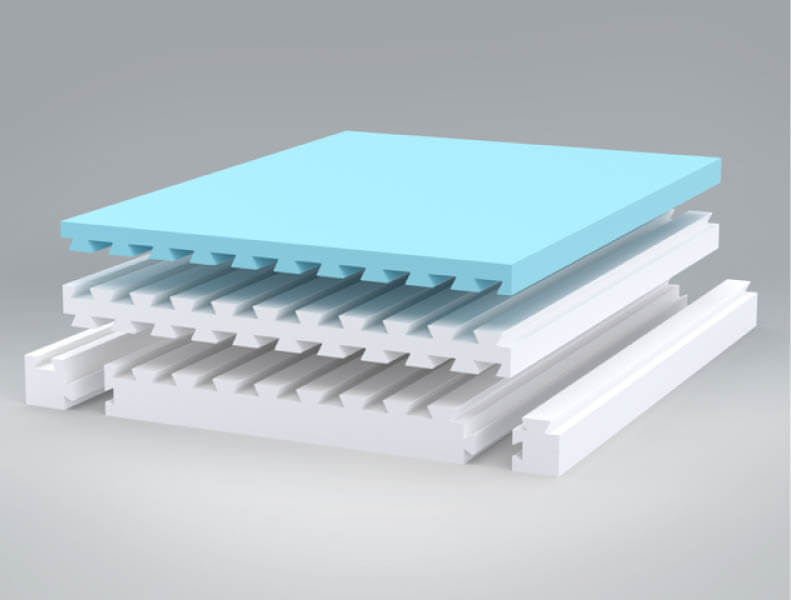
New ways of cutting and shaping also are revolutionizing foams. Computer numerical control (CNC) vastly expands the possibilities for cutting foam that is more breathable, relieves pressure points, and contours to the body (imagine traditional egg-crate mattress toppers on steroids, cut to an infinite array of firmnesses, support levels, and intriguing designs).
“When you have that variation going from a head to a foot of a mattress, depending on a brand or a company’s technology, that can lead to better pressure relief and improved comfort for the consumer,” says Lonstein.
“Zoning” is becoming increasingly popular, as mattress and foam makers use different tools and techniques—including CNC cutting or layering different types of foam—to create pressure gradients that respond distinctly to “zoned” parts of the body in a single mattress.
Some manufacturers are reducing the petroleum content of their foams, creating bio-based foams that incorporate higher rates of bio-based materials, such as vegetable oils.
While the European Union is urging foam makers to convert 5% of foam weight from petroleum-based to bio-based, Softtex is making its BioBased brand in the 20% to 25% range. Bio-based foams can be pricier, but Ducatteeuw expects that demand will create a new market for them.
“We are doing this for sure for the environment, but it also creates a whole new comfort,” he says.
Covestro, the Pittsburgh-based Mattress Recycling Council Distinguished Service Award winner, crafts its CQ-brand products to contain at least 25% alternative, non-fossil-fuel feedstock. Covestro is also keeping foams truly circular—the gold standard of recycling—with its Evocycle® CQ Mattress technology. The process breaks down complex materials into their pure, original elements, ready to be made into new products, says Tim Thiel, marketing manager, performance materials, Covestro.
“This enables these materials to be reintroduced into the production process at a raw material stage and allows us to create new polyurethane foam with those end-of-life materials rather than them ending up in landfills,” he says.
Having the conversation
Retail mattress shopping is “inherently personal,” notes Lopez. Consumers lie down in a public place and assume their typical sleep positions. They also share intimate details with the salesperson—their budgets and whether they have a partner, pets, chronic conditions, or sleep troubles.
The skilled RSA shows empathy and, most importantly, offers solutions.
“You may have one consumer who’s prioritizing a supportive mattress, while others want to be cradled,” says Lopez. “Depending on the preference of the consumer, the foams of these mattresses are playing different roles.”
The key is translating foam features into the benefits that sleepers will experience, recognizing that no two foams are alike while guiding buyers toward the best choice for a good night’s sleep.
One solid option is memory foams. They help the top of the mattress conform to the body’s contours and provide pressure relief, but like all foams, they’re not one-size-fits-all. They come in different densities and have different qualities that buyers should try.
Now, let’s talk about hot sleepers. The experts note that most sleepers can control their thermostat settings, so the role of the mattress is to stay on an even keel with that preferred temperature.
In these cases, a foam with higher permeability can create better air flow and, in certain environments, make a mattress feel more comfortable. Better ventilation systems transport and dissipate the body’s heat through the mattress. High-airflow foams combined with coil hybrid technology can promote airflow into open spaces, creating the conditions that help keep the mattress closer to the room’s ambient temperature, Lonstein says.
“If a foam is able to circulate air well, it helps to make the sleep surface closer to the temperature in the room,” he says.
Recyclability, sustainability, and durability assure buyers that their new mattress was produced responsibly, will last longer, and will someday be disposed of responsibly. Many foam makers act sustainably right in their factories. Covestro commits to energy efficiency and low-emissions manufacturing, while Carpenter’s decades of repurposing foam scraps into the basis for carpet cushioning and other products has diverted billions of tons of foam away from landfills.
Carpenter also promotes recycling at the design stage—for instance, eliminating adhesives from its ZIPR™ mattress for easier disassembly and separation of the foam layers.
Advances in recycling itself are coming, says Thiel. Covestro is coordinating with foam dismantlers to demonstrate more efficient ways to sort polyurethane foams from used mattresses.
“For consumers making long-term mattress investments today, this means their purchase will likely be part of a much more sustainable life cycle by the time replacement becomes necessary, with comprehensive recycling options and potentially significant recycled content in their next mattress,” Thiel says.
Glossary
Talk about foam like the pro you are
Additives: Every polyurethane foam contains the same basic ingredients (polyols and isocyanates, if anyone asks), but makers add ingredients that improve properties such as breathability, support, and comfort.
Bio-based: Vegetable oils and other natural, renewable materials can replace some of the petroleum that’s used in traditional polyurethane foams. The USDA BioPreferred designation certifies that at least 22% of the foam is made from bio-based, renewable materials.
CertiPUR-US®: This important certification assures mattress buyers that their foams are made without formaldehyde, ozone depleters, phthalates, or mercury, lead, and other heavy metals. They have low levels of volatile organic compounds, or VOCs, and are screened to make sure they don’t contain harmful chemicals.
Latex: Makers are using latex, an all-natural foam derived from tree sap, as an alternative or complement to polyurethane. While latex is soft and supportive, it doesn’t mold to the body like memory foam.
Quilting versus core foam: Quilting foam is a layer stitched with fiber and fabrics that, together, constitute the surface of many mattresses. From the center and base of the mattress, today’s innovative core foams deliver the breathability and pressure relief that help consumers get a better night’s sleep.
Zones: Zoning conforms a single mattress to provide support and pressure relief for different parts, or zones, of the body. Zones number from three to seven, indicating how many separate body parts get attention. Seven-zone mattresses, while pricier, can help people with chronic or orthopedic issues by targeting every key body part—the head and neck, shoulders, lumbar, hips, thighs, lower legs, and feet. They are also ideal for those looking for an elevated experience or sleep support from their mattress