

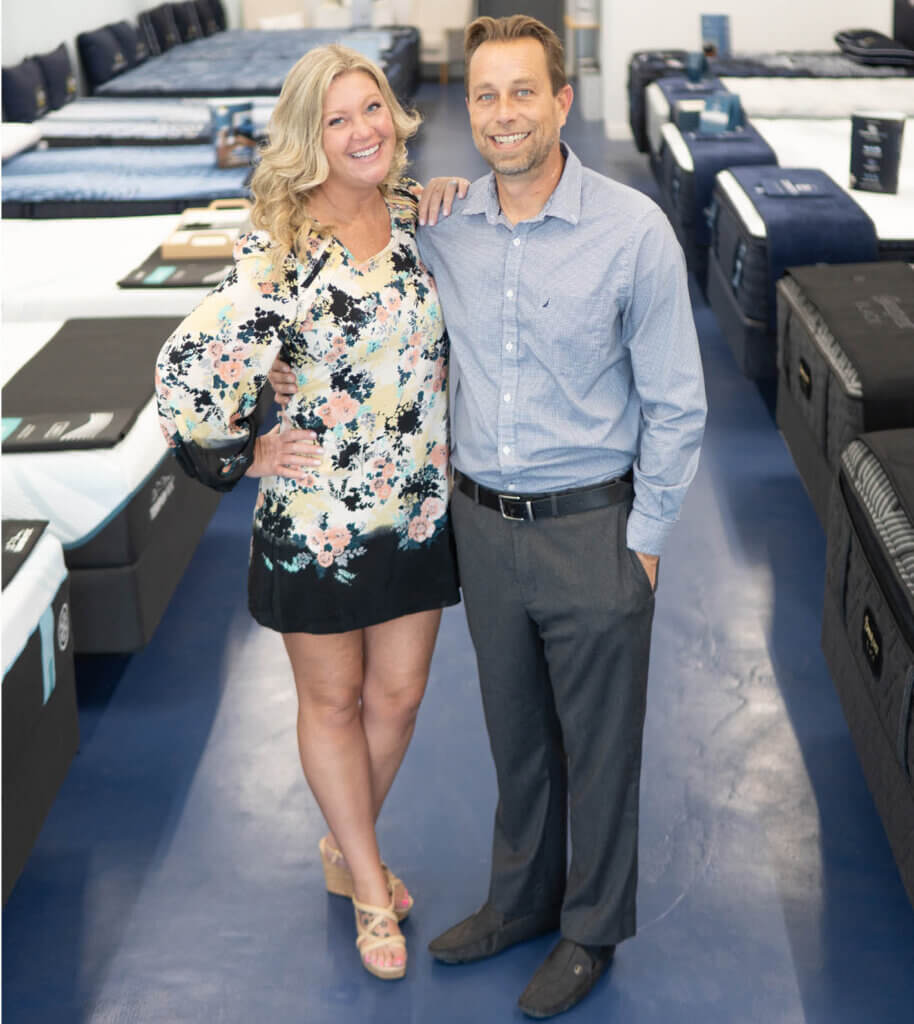
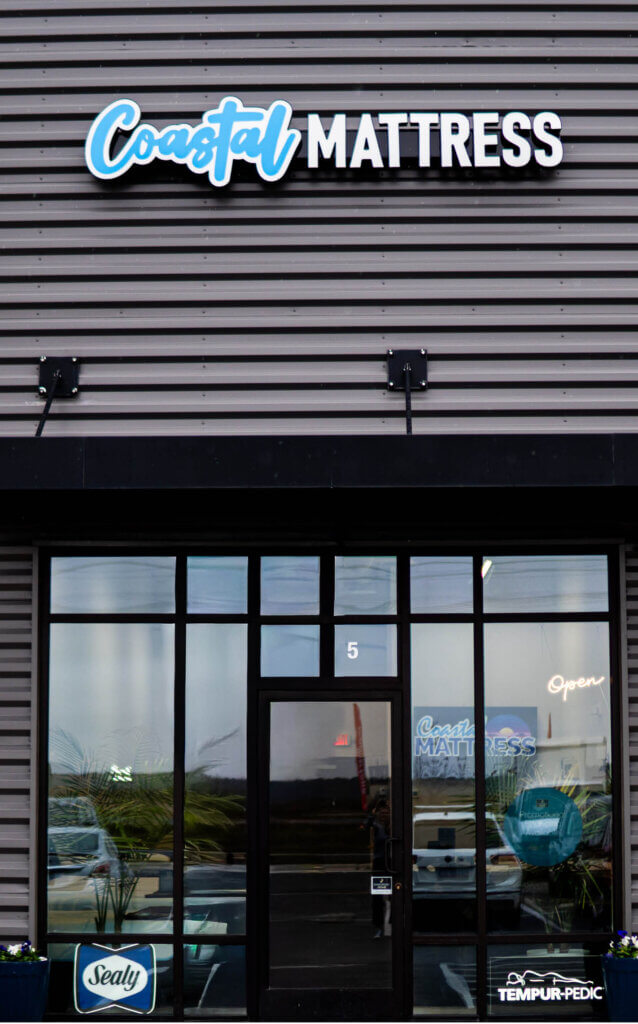
When Hardy and Erica Waddell opened Coastal Mattress in Sneads Ferry, North Carolina, they were confident there was room for a better sleep-shopping experience along
the coast—one built on trusted brands, curated showrooms, and
personalized service.
The greater Topsail Island area has only about 6,000 residents, yet Coastal Mattress has grown quickly, adding a second store across the bridge in Surf City and establishing itself as a standout among big-box chains and local furniture stores.
“It’s rare to see a niche mattress retailer in an area with this low of a population,” Hardy says. “But we’re already seeing repeat business and strong word of mouth, and that tells me we’re doing something right.”
What they’re doing right is a mix of big-brand credibility, a tightly curated showroom, smart digital marketing, and a deeply personal approach to selling (right down to the owner showing up at the customer’s door on delivery day).
From mom-and-pop employee to coastal entrepreneur
Hardy’s roots in the business go back to 1999, when he started working for a six-store mom-and-pop furniture chain in eastern North Carolina. From there, he spent time with larger specialty players, including Mattress Firm and Sleep America out West.
Those years gave him a clear sense of what worked and what didn’t.
When the Waddells moved from Greenville, North Carolina, to the coast, Hardy did what any experienced retailer would do: He shopped his future competition.
“The experience was terrible,” he recalls. “Most of the beds weren’t even on the floor. They were still wrapped in plastic, standing up on end. Nobody was asking qualifying questions, but honestly, they didn’t have anything to offer. They might have had two mattresses in the whole place.”
He also noticed something else: In a 20-mile radius, there wasn’t a single specialty mattress shop, and none of the stores carried major national brands.
“I knew nobody was going to buy a premium bed if they couldn’t try it,” he says. “There was a huge gap here.”
That gap was filled by Coastal Mattress. The Waddells opened their first 1,200-square-foot store in Sneads Ferry in January 2025, followed quickly by a 1,200-square-foot Surf City location on the other side of the island.
Boutique vibe, big-brand assortment
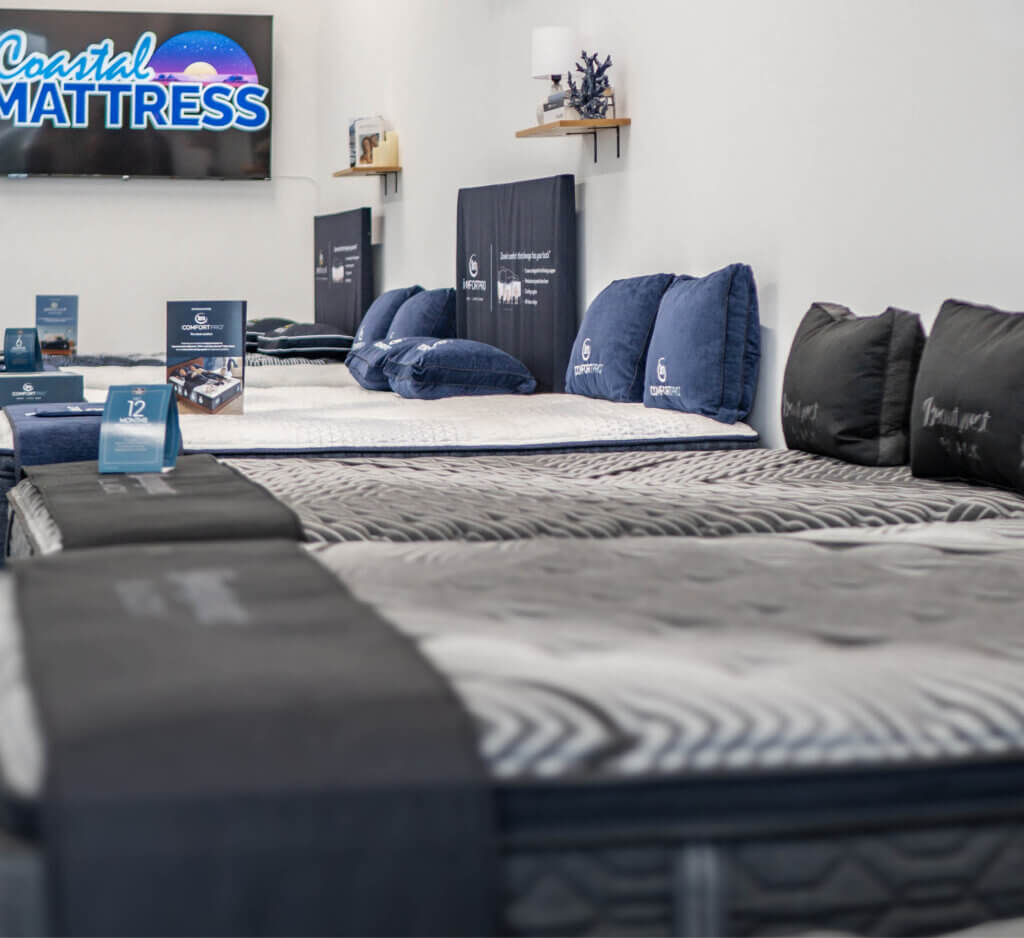
Coastal Mattress’ model is built around small-footprint stores with carefully edited assortments and well-known names.
“We stick with all the big brands,” Hardy says. “Sealy, Serta, Stearns & Foster, Simmons, Tempur-Pedic—brands that have 100 years of history. That gives us credibility right off the bat. Customers recognize the names and trust what they’re seeing.”
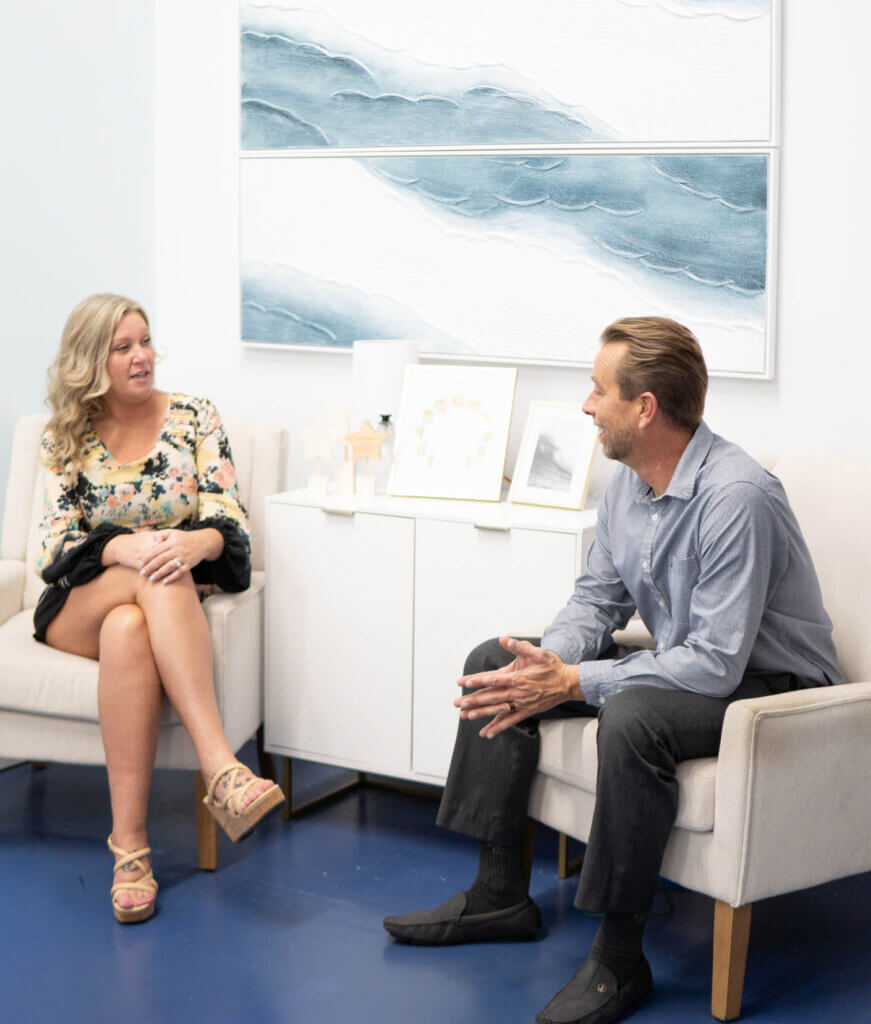
Rather than trying to replicate the feel of a large-format retailer in a smaller space, Coastal Mattress leans into a boutique look and feel:
- 1,200-square-foot showrooms designed to feel boutique, curated, and easy to shop.
- Beds spaced about 18 inches apart so nothing feels crammed in.
- Blue-painted floors that echo the nearby ocean.
- Low-level island music for a relaxed beach vibe.
- Shelving with books, candles, and softly lit accents instead of banners and sale flags.
“You won’t see [point-of-purchase] material plastered everywhere or sale signs hanging from the ceiling,” Hardy says. “It’s set up much more boutique-ish than big box. We focus on the sleep side of things, not a ‘blowout sale’ feel.”
A comfort test that starts with listening
The sales process at Coastal Mattress is simple, structured, and highly personalized. It starts with listening.
“A bed plays a different role in everyone’s life,” Hardy says. “You’ll have some customers who say, ‘I can sleep anywhere; I can sleep on the floor.’ Others come in and say, ‘I just had back surgery. I’m hurting, I can’t stay asleep.’ You can’t talk to those customers the same way.”
Rather than running every shopper through the same script, Hardy and his team tailor their conversations to the customer’s needs, budget, and expectations. A typical journey looks like this:
- Start with qualifying questions. Associates ask about aches, pains, sleep positions, and what’s working—or not working—with the customer’s current mattress.
- Move on to a comfort test with four distinct feels. Customers can try three traditional innerspring models (firm, medium, and plush) and one nontraditional option, such as a Tempur-Pedic model.
- Finish by showing good, better, and best within the preferred feel. Once the shopper identifies a favorite comfort, the sales associate shows three mattresses in that feel—good, better, and best—and explains the step-up story.
“They’re all going to feel relatively similar,” Hardy explains. “What changes as you move up is the sleep benefit: better pressure relief, improved support systems, and increased longevity.”
The result is an average ticket of around $2,000, with occasional sales in the $8,000–$9,000 range. Top sellers include Tempur-Pedic and Beautyrest Black.
Serving locals and the short-term rental market
Coastal Mattress doesn’t just serve local residents. The area’s booming vacation rental market is a major part of the business and a place where Hardy’s creativity shines.
“Out here, you’ve got beach homes getting turned over every week,” he says. “Beds get damaged, spilled on, stained. The rental companies will call and say, ‘We’ve got another tenant coming in two hours. We need a bed immediately.’”
To capture that business, Coastal Mattress keeps inventory on hand for quick turnaround and has built relationships with about six property management companies in the area. One of the store’s most effective tools is a free inspection program.
“We went into their locations with brochures offering free mattress inspections for all their rental properties,” Hardy says. “We’d go in, inspect each bed, and note if it was sagging or stained. Then we’d send them a digital report.”
The managers use those reports to add value for homeowners—and often, Coastal Mattress gets the replacement sale.
“It’s just getting creative,” Hardy says. “Guerrilla marketing. Getting out there, meeting people. In a small-population area, it’s very easy to win the customer when the experience is so poor everywhere else.”
Digital-first marketing in a tiny market
In a market too small for heavy traditional advertising, the Waddells have leaned heavily on digital channels.
“We do a lot of advertising on Google, Facebook, and Instagram,” Erica says. “We see awareness coming from social media, and then very high-intent buyers coming from Google. Switching more of our budget to Google Ads has been a game changer.”
Facebook tends to be the company’s strongest social platform, especially around promotional periods like Black Friday, when engagement climbs. The couple also participates in manufacturer-supported digital efforts from partners such as Tempur-Pedic and Sealy, which add to their mix of images, videos, and reels.
A small community event with a neighboring Pilates studio offered a glimpse of how the Waddells plan to expand their local presence over time. Coastal Mattress co-hosted a “muffins and mimosas” event for the studio’s grand opening—a perfect demographic overlap for new mattress buyers.
“We knew their customer was our customer,” Hardy says. “Women 35 to 50, right in the sweet spot for new bed purchases.”
Owner-delivered service
A key differentiator for Coastal Mattress is what happens after the sale. The store offers free delivery, setup, and removal—already a competitive advantage in a market where many retailers charge $100 to $150 for that service. But the real surprise is who shows up.
“I personally accompany every delivery,” Hardy says. “I make sure it’s done well and done professionally. Customers are shocked when they see me at their door. They say, ‘Oh, wow, you do it all.’”
He knows that as the business grows, he might not be able to make every delivery. For now, though, it’s powerful proof of how much he cares about the customer experience.
“It’s been a huge benefit,” he says. “People can see I’m invested in what happens after they swipe their card.”
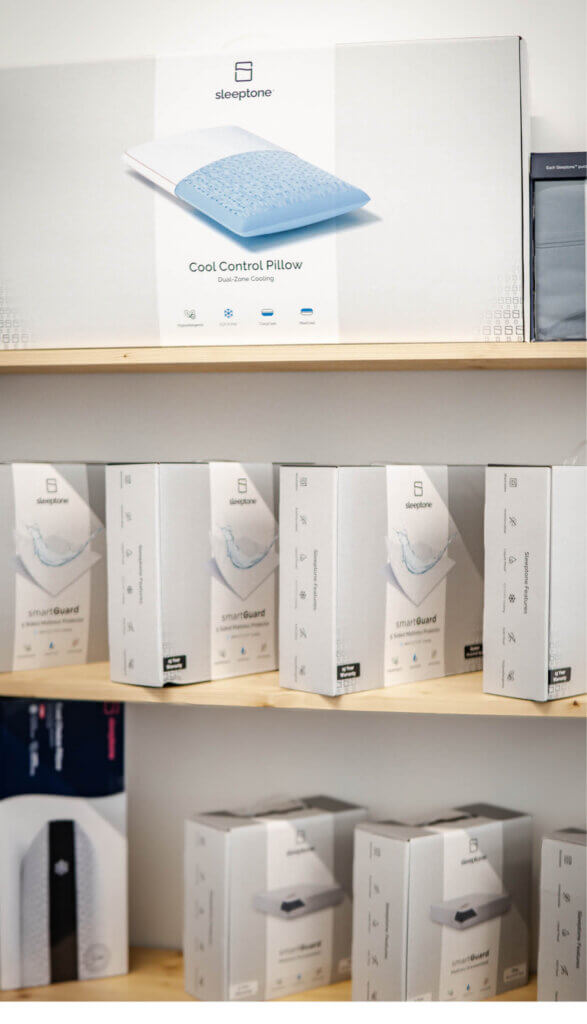
Coastal Mattress also leans into accessories that align with its focus on comfort and cooling. The store stocks cooling pillows, Tencel-based protectors designed to block spills and perspiration while staying breathable, natural-fiber sheets, and a range of bed frames and headboards.
“We want the total sleep experience to match the mattress,” Hardy says. “If they’re waking up hot because of their sheets or protector, we haven’t really solved their problem.”
Why body structure beats ‘firm is best’
Ask Hardy for his biggest piece of advice about mattress selection, and he doesn’t hesitate: Start with body structure, not firmness labels.
“I like to relate it to shoes,” he says. “If your foot’s a size 10, you need a size 10 shoe. Beds work the same way. You don’t want to be sleeping on top of the bed. You want to sink in just enough for it to conform to you.”
He uses a simple example to make the point with customers: a 90-pound woman versus a 300-pound man, both side sleepers.
“If a 90-pound woman lies on a firm bed on her side, she’s being suspended by her hip and shoulder,” he explains. “She doesn’t have enough weight to push into that hard surface, so she needs a softer surface to relieve pressure.”
The heavier customer, on the other hand, has enough weight to compress a firmer surface and get proper support.
“When you explain it in terms of body structure, customers get it immediately,” he says. “It makes sense to them, and it builds credibility.”
The firmness myth—and the cost of not lying down
Hardy sees two big pitfalls over and over again, both for shoppers and for retailers. The first is the idea that “firm is good.”
“Over half of our customers walk in saying, ‘I want a firm bed,’” he says. “A lot of that comes from medical professionals telling people they need a firm surface. But in most cases, that’s just not accurate.”
He points out that ultra-firm surfaces can create pressure points that lead to numbness, tossing and turning, and nonrestorative sleep—exactly the opposite of what shoppers want.
“The only time a very firm bed is absolutely appropriate is someone extremely heavy or someone with serious mobility issues who needs help getting out of the bed,” he says. “Otherwise, a bed that can conform and relieve pressure is usually the better choice.”
The second pitfall is even simpler: not lying down on the mattress.
“The biggest mistake is not getting the customer in the bed,” Hardy says. “If they don’t lie down, you’re asking for a higher rate of returns and comfort exchanges, because you haven’t really fit them to the mattress.”
He encourages sales associates to invite every shopper to stretch out—and to explain why it matters. On the consumer side, he advises people never to base a purchase on a quick touch with the hand or a short sit on the edge.
“Customers aren’t experts,” he says. “They don’t shop for mattresses every day. Our job is to educate them, challenge some of those misconceptions, and guide them to what will actually help them sleep better.”
For a small coastal retailer, that education-first approach is paying off in repeat business, rental referrals, and a solid reputation that’s poised to grow right along with the community.
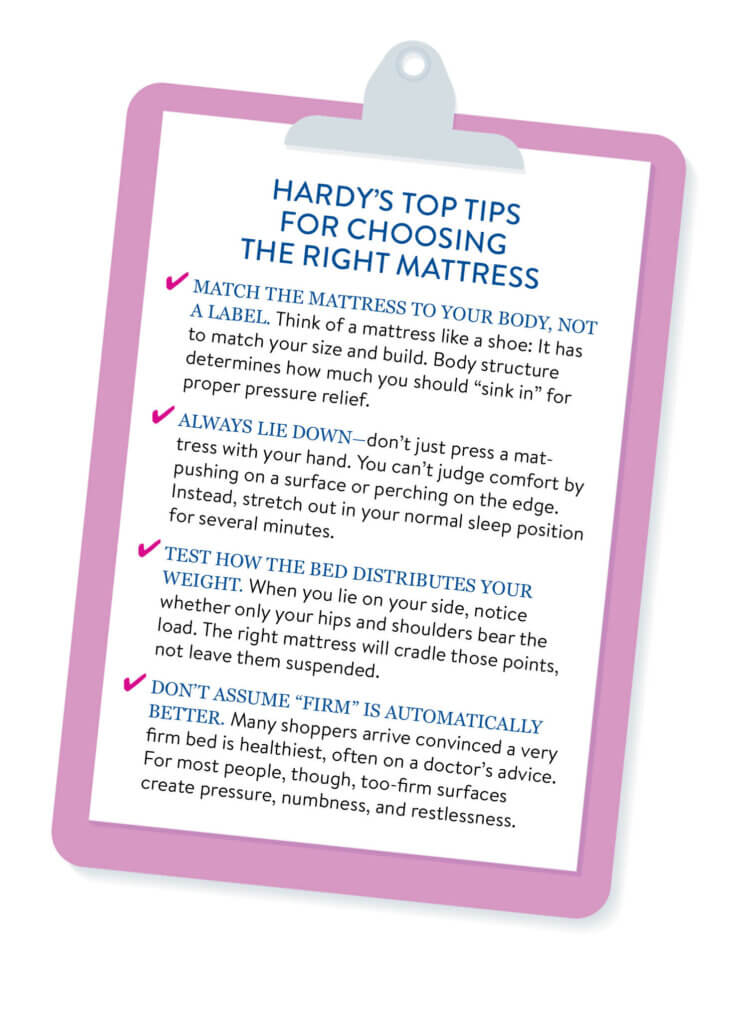
Hardy’s Top Tips for Choosing the Right Mattress
- Match the mattress to your body, not a label. Think of a mattress like a shoe: It has to match your size and build. Body structure determines how much you should “sink in” for proper pressure relief.
- Always lie down—don’t just press a mattress with your hand. You can’t judge comfort by pushing on a surface or perching on the edge. Instead, stretch out in your normal sleep position for several minutes.
- Test how the bed distributes your weight. When you lie on your side, notice whether only your hips and shoulders bear the load. The right mattress will cradle those points, not leave them suspended.
- Don’t assume “firm” is automatically better. Many shoppers arrive convinced a very firm bed is healthiest, often on a doctor’s advice. For most people, though, too-firm surfaces create pressure, numbness, and restlessness.