

For many consumers, latex is familiar but not necessarily understood. They might know it is associated with natural materials, durability, and premium mattresses, but they often don’t know how latex feels different from other mattress materials or why it may be the right choice for their individual sleep needs.
That knowledge gap creates an opportunity for mattress retailers. The most successful latex sales conversations don’t begin with a detailed explanation of foam construction or manufacturing methods; they begin by identifying what the customer wants to improve about their sleep experience and connecting those concerns to the benefits latex can provide.
“The best retail salespeople don’t sell by reciting specifications,” says Christian Klose, CEO of Grupo Fortaleza’s NüWave Division. “They ask thoughtful questions, they listen, and then they connect the customer’s needs to a product that delivers lasting comfort, natural materials, and real long-term value.”
Januka Karunasena, co-founder and CEO of Earthfoam, agreed that retail sales associates should focus on understanding the material before trying to sell it.
“RSAs need to know that latex is arguably the most dynamic, durable, and natural material in the bedding industry,” he says. “Latex is a responsive, active surface. Unlike traditional poly foams, latex pushes back and supports the sleeper’s alignment while naturally regulating temperature. It is the ultimate antidote to the sinking feeling.”
Indeed, Bob Quickstad, president and CEO of Mountain Top Foam, says that compared to memory foam, latex is often more breathable and delivers a buoyant support that many consumers prefer over the more conforming quality of memory foam.
“For consumers seeking more natural materials, latex is a great solution,” Quickstad says. “As compared to predominantly innerspring mattresses, latex offers exceptional comfort.”
Mountain Top Foam’s research shows that almost all consumers value the benefits of latex. “It is especially popular for the 62% of premium consumers who prefer a more traditional feel,” Quickstad says.
For RSAs, selling latex effectively is less about memorizing product details and more about learning how to recognize the customer needs that naturally align with the material’s strengths.

Start with the customer’s problem
One of the most common mistakes RSAs make when selling specialty sleep products is focusing on the product before understanding the shopper. While latex has many impressive characteristics, consumers are rarely walking into a showroom looking for a specific foam type; they are looking for solutions to sleep problems.
Klose recommends starting with simple questions that uncover those needs.
“What would you most like to change about your current mattress?” and “How did your last mattress hold up?” are two questions he believes can reveal valuable information about whether latex is a good fit.
Karunasena recommends asking questions that uncover both sleep habits and lifestyle priorities. For example, does the customer wake up feeling “stuck” in their mattress? Do they tend to sleep hot? Are they looking for organic or certified natural materials? The answers can quickly reveal whether latex is likely to meet their expectations.
A customer who says they wake up hot might be looking for a cooler sleep surface. A shopper who complains about feeling trapped in memory foam might be searching for a mattress that allows easier movement. Someone frustrated by sagging or body impressions in their current mattress might be looking for better long-term support. Eco-conscious shoppers might appreciate learning about natural latex’s renewable origins and organic certifications.
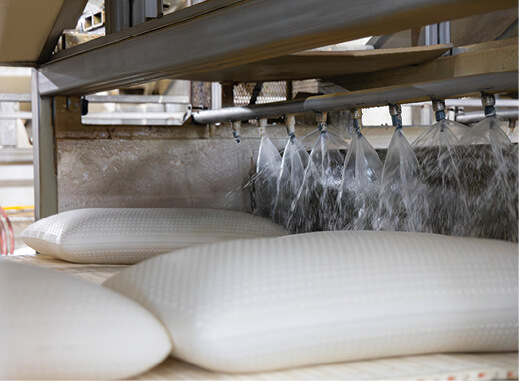
Every Talalay core and pillow undergo a five-stage wash process, ensuring a clean and healthy product.
Michael Tilki, executive vice president, sales East, at Talalay Global, says customers who experience discomfort or frequent movement during the night “will certainly benefit from the unique pressure-relieving qualities of latex.”
The goal is not to convince every shopper that latex is the answer. Instead, retailers should identify the customers whose sleep concerns naturally align with what latex does best.
Translating the benefits of latex
Once a shopper’s needs are understood, the next step is explaining why latex may address those concerns. The challenge for RSAs is avoiding overly technical explanations that might confuse rather than educate. Consumers don’t necessarily need to understand every aspect of latex production. They need to understand how the mattress will feel and perform.
“Latex foam comfort layers provide consumers with superior pressure relief, durability, and breathability,” Tilki says. “Due to the unique resiliency of rubber, these performance characteristics cannot be matched with polyurethane foam.”
Those characteristics become meaningful when connected to everyday experiences. For shoppers moving away from memory foam, responsiveness is often one of latex’s biggest advantages.
“If they are coming off memory foam, they are often tired of the heat and the stuck feeling when they turn over,” Klose says. “NüWave natural latex rubber foam answers both. It breathes, and it moves with the body instead of holding them in place.”
Karunasena encourages retailers to simplify the comparison.
“We always tell people that natural latex offers the contouring pressure relief of foam but with the buoyant, springy support of an innerspring,” he says. “Memory foam absorbs your energy and traps you in the bed. Latex is buoyant; it keeps you resting on top of the mattress, making it incredibly easy to roll over and change positions.”
Quickstad advises RSAs to maintain a “performance-driven focus” and explain that different formulations and production processes are simply used to achieve distinct performance characteristics.
“Shift the conversation away from industry debates over which type is objectively ‘best,’ ”Quickstad says. “Focus instead on whether the customer enjoys the feel and comfort of the mattress, and if it resolves their specific sleep complaints.”
For shoppers considering an innerspring mattress, Karunasena notes that latex provides responsive support and consistent, quiet performance without metal coils. Klose adds that shoppers frustrated with sagging coils or partner disturbance often appreciate latex’s durability and motion isolation.
By focusing on solutions rather than specifications, RSAs can help customers understand why latex may provide a better experience.
Keep explanations simple
Latex terminology can quickly become overwhelming for shoppers. Terms such as “natural,” “blended,” “Dunlop,” and “Talalay” are important distinctions within the industry, but retailers should be careful not to introduce too much information to customers too early.
“The biggest misconception is that all latex foam is the same,” Klose says. “It is not.”
Karunasena believes another misconception begins with the word itself. “[Many people think] that latex means plasticky, hot, or artificial,” he says. “Retailers should clarify that natural latex comes from a tree; it is literally baked rubber tree sap.”
The simplest way to explain the differences is to separate the conversation into two parts: what the foam is made from and how it is produced.
“Dunlop and Talalay are the two different manufacturing processes that are used to make latex,” Tilki explains. “Natural or blended are latex formulations that can be produced using either manufacturing process.”
Karunasena recommends keeping those distinctions relatable.
“Natural versus blended is like comparing whole foods with processed foods,” he says. “Natural comes straight from the rubber tree, while blended mixes natural sap with synthetic materials. Dunlop is dense and supportive, while Talalay is lighter and airier.”
For most shoppers, the important takeaway is understanding that latex products can vary and that quality and construction matter. Klose recommends keeping the conversation focused on the benefits customers care about most.
“Keep it to two simple ideas: what the foam is made from, and how it is made,” he says. That approach allows RSAs to educate customers without turning a mattress purchase into a technical seminar.
Let customers feel the difference
Latex is one of the categories where a hands-on showroom experience can make a significant impact. Because many of its advantages are physical—responsiveness, pressure relief, and support—customers often understand the difference more quickly when they experience it themselves.
“This is where you win the sale,” Klose says. “Make it an experience, not a description.”
He recommends several simple demonstrations that allow shoppers to compare latex with other mattress materials. RSAs can ask customers to press a hand into the mattress and observe how quickly the surface recovers, roll from side to side to experience responsiveness, or sit along the edge to feel support.
Karunasena recommends what he calls the “Roll-Over Test.”
“Have the customer lie on a memory foam bed and roll from their back to their side,” he says. “Then have them do the exact same thing on a latex bed. They will instantly feel the latex push back and help them turn. The quick rebound and effortless repositioning are latex’s biggest physical selling points.”
For couples shopping together, demonstrations become even more valuable because both sleepers can evaluate motion isolation and ease of movement.
Tilki recommends another demonstration focused specifically on pressure relief. He suggests having customers lie on their side on a conventional mattress and pay attention to pressure around their shoulders and hips before repeating the same exercise on a latex mattress.
“A well-made latex mattress will not bottom out and will relieve the pressure in these areas better,” he says. When shoppers experience the difference themselves, RSAs no longer have to convince them; they simply guide the discovery.
Shift the conversation from price to value
Because latex mattresses often represent a premium purchase, RSAs need to be prepared to address price concerns. However, the most effective approach is not defending the price but helping customers understand the value behind the investment.
“Move the conversation from price to durability, because that is where natural latex rubber foam wins,” Klose says.
Karunasena encourages retailers to discuss longevity, craftsmanship, and transparency.
“You justify the price through traceability, craftsmanship, and longevity,” he says. “A quality latex mattress will easily outlive a standard polyurethane bed, making the cost per year much lower.”
He also recommends highlighting the sourcing story behind natural latex, including the use of responsibly harvested materials and ethical supply chains, for shoppers who value sustainability alongside performance.
Tilki says long-term durability remains one of latex’s strongest advantages. “Not only do latex mattresses resist body impressions better than conventional mattresses, but they also maintain their peak performance characteristics longer than any other components,” he says.
That durability gives retailers an opportunity to reframe the purchase. Instead of focusing only on the purchase price, RSAs can help shoppers consider the cost of replacing lower-priced mattresses more frequently. The conversation becomes less about spending and more about investing.
Build trust through transparency
Today’s mattress shoppers often arrive with extensive online research, but they might still struggle to separate meaningful information from marketing claims. That makes honesty and transparency at the retail level especially important.
“Many consumers hear ‘latex’ and don’t quite understand what the product actually is,” Tilki says. A straightforward explanation of the material and its benefits can help shoppers feel more confident.
“The word ‘natural’ on a label doesn’t always mean the same thing,” Klose says. “A lot of what gets sold as ‘natural’ is actually a blend of natural and synthetic rubber.”
Karunasena believes today’s consumers increasingly value simple, honest explanations. “Sell the honest story of the materials, not gimmicky sleep pseudo-science,” he says. “When you show customers a mattress made simply of tree sap, wool and cotton, and explain that it will hold its shape for a decade, the product essentially sells itself.”
He adds that retailers should not overlook discussions around environmental and health benefits, noting that shoppers increasingly want to know exactly what materials are inside their mattresses and appreciate products that avoid unnecessary
synthetic chemicals.
The goal is not to overwhelm customers with technical distinctions but to provide enough information to help them make an informed decision. Trust is often what separates a customer who makes a purchase from one who leaves to continue shopping elsewhere.
Confidence creates customer loyalty
Latex does not need to be sold as a complicated premium product. When RSAs ask the right questions, demonstrate the right benefits, and connect the mattress to the shopper’s personal sleep challenges, latex becomes a solution—not just another option on the showroom floor.
In fact, selling latex successfully ultimately comes down to confidence.
RSAs who understand the product and believe in its benefits are better equipped to communicate its value to shoppers.
“Be confident that in selling a latex mattress to your customer, you will be improving the quality of their sleep,” Tilki says.
That confidence can also create long-term business benefits. Latex customers often become loyal advocates because they appreciate the comfort, durability, and performance of the product.
For Klose, the most effective latex sales approach comes down to telling a compelling story while focusing on the customer’s needs.
“Sell the story and the longevity, not a list of features,” he says. “Shoppers buy with emotion first and justify with logic afterward.”
Karunasena agrees that authenticity ultimately wins.
“When a retailer can confidently tell a shopper exactly what they are breathing in every night, it builds a massive amount of trust,” he says. “Transparency is your best closing tool.”
Words to Know (So You Sound Like a Pro)
All-natural latex: Latex made primarily from the sap of the rubber tree with minimal additives during manufacturing. All-natural latex is valued for its durability, responsiveness, and renewable origin.
Blended latex: A combination of natural latex and synthetic latex designed to balance performance, consistency, and cost. Blended latex can still provide excellent comfort and durability.
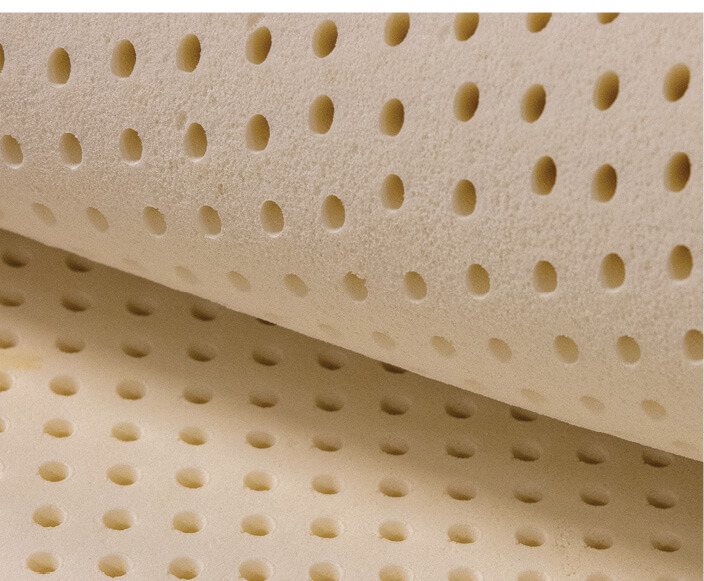
Breathability: The ability of a mattress material to allow air to circulate. Latex’s open-cell structure and pin-core design help promote airflow, making it a popular option for people who tend to sleep warm.
Buoyancy: The supportive, “lifted” feeling latex provides. Unlike memory foam, which allows sleepers to sink deeply into the mattress, latex keeps the body more on top of the sleep surface while still relieving pressure.
Contouring: How well a mattress conforms to the body’s curves. Latex contours enough to relieve pressure but generally doesn’t create the deep “hug” associated with memory foam.
Dunlop process: One of the two primary methods for producing latex foam. Dunlop latex is typically denser, more supportive, and often used in support cores or firmer comfort layers.
Durability: The ability of a mattress to maintain its comfort and support over time. Latex is widely recognized as one of the most durable mattress materials, often maintaining its performance longer than many conventional foams.
GOLS (Global Organic Latex Standard): A certification verifying that latex comes from certified organic sources and that manufacturing meets established environmental and social criteria.
Motion isolation: A mattress’s ability to reduce movement felt by a sleep partner. Latex absorbs more motion than traditional innersprings while maintaining a responsive feel.
Open-cell structure: The interconnected air pockets within latex foam that help improve airflow, temperature regulation, and moisture management.
Responsive support: The ability of latex to immediately adapt to changing body positions without the delayed recovery characteristic of memory foam. This responsiveness makes repositioning easier during sleep.
Synthetic latex: Latex foam produced primarily from petroleum-based materials, typically styrene-butadiene rubber, or SBR. It can provide some of the performance characteristics of natural latex but differs in composition.
Talalay process: A manufacturing method that uses vacuum expansion and flash-freezing to create a more consistent, lighter, and often softer-feeling latex foam. Talalay latex is commonly used in premium comfort layers.