
Once upon a time, a shopper walked into a mattress showroom. It was full of strange creatures lined up like soldiers. Unfamiliar words were whispered in the air: “Point elasticity.” “High-density foam.” “Motion isolation.” “OEKO-TEX®.”
But just like scary fairy tales, mattress shopping can have a happy ending, especially when retailers and sales associates learn to tell a story with a beginning, middle, and end. The story goes like this: The shopper faced the villain of bad sleep disrupting their life. They sought and found the right mattress. They slept happily ever after.
“You’ve got to give the consumer the reason why, and you’ve also got to have an emotional connection somewhere,” says Don Wright, chairman and CEO, Wright Creative Branding & Labels. “The retail environment is important because the product is a mystery. It’s a rectangle on the floor in a crowded environment. The retailer needs the tools to help explain what’s going on inside and help steer customers to make the decision of why they should buy that mattress.”
Here, industry experts help RSAs and retailers connect the dots and turn the rich but overwhelming elements of a mattress showroom into a riveting story.
First impressions
On the showroom floor, the “eyes” have it. Every story “starts with an aesthetic connection,” says Wright. The technicalities of cooling and pressure relief will enter the conversation eventually, but right off the bat, “the package has to look pretty.”
“It’s a visual decision,” he says. “There’s an emotional connection you’re making with the product immediately.”
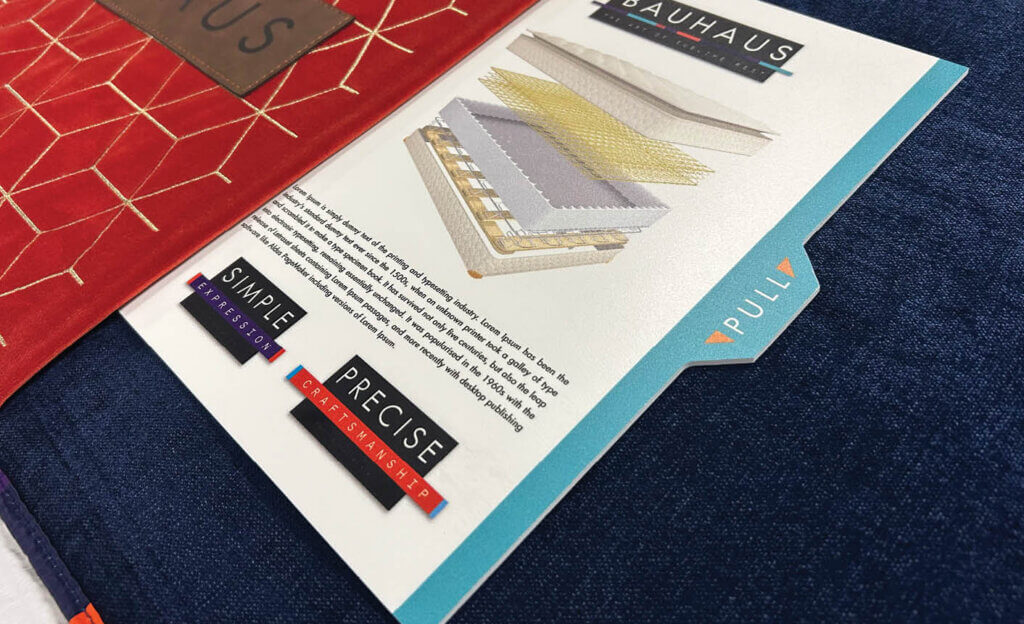
The graphics and display items that come with each mattress are designed down to the word and Pantone color choice for POP (point of purchase) that pops. Colonial LLC, a specialist in display and branding products, has written 12 rules of mattress retail, and No. 1 is, “You only get one chance to make a first impression.”
“When people come into the stores, make sure that the display materials are positioned correctly, that they’re not upside down, that you make a really great impression, whether it’s with wall graphics or headboards or window clings,” says Colonial President Wes Keever.
Effective messaging and displays should mimic what customers have already found online, Keever notes. Once shoppers are in the store, the top-of-bed touches they can see and feel, such as fabrics and handles, tell a story about price points.
“You have to dress it for the story that you want to tell,” says Keever. “If it’s an extremely luxury mattress, it needs to look like a luxury mattress. You can dress them for whatever perceived value you want it to be.”
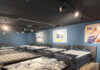
In the showrooms of Mathis Home, a retailer with locations in Oklahoma, California, Arkansas, and Texas, 36 inches between mattresses gives shoppers the physical space, and even a bit of mental space, to relax. Every pillow, mattress protector, and remote control is placed with precision. The intent is to bring “order to an unfamiliar environment” and inspire shoppers to think, “This is better than I thought it would be,” says Kerry Tramel, president of the Mathis Home bedding division.
“The POP material needs to be sharp,” he says. “It needs to be crisp. It needs to be updated and not too much in your face.”
Specials and deals should be called out, he adds, but “in a reasonable manner,” being careful not to overemphasize savings to the point where sleep becomes de-emphasized.
“We need to make sure that all customers’ needs are addressed, and having a great-looking showroom is paramount,” Tramel says.
Customers want simple and engaging sales presentations, and RSAs want simplicity in the options they can present to customers that “close every deal,” says Symphony Sleep President John Schulte. The key is creating a layout that guides shoppers through a clear and educational journey. Symphony Sleep’s structured merchandising includes question-based entry points, such as “What’s Your Sleep Angle?” that naturally pull in the consumer and start the conversation.
“From there, visual, benefit-driven POP—placed right at the floor models—helps explain features in a simple, engaging way, while good-better-best assortments make it easier to compare and decide,” he says.
Listen up

After shoppers have adjusted to the setting, it’s time for RSAs to listen.
RSAs should “simplify the experience and make it personal,” says MLILY National Sales Director Derek Leishman. Build the customer’s confidence by starting with simple, diagnostic discovery questions, he says, and then guide shoppers “to a small, curated set of options based on how they sleep, like pressure relief, cooling, or back support, rather than technical specs.”
The questions uncover why customers are there, and the answers help RSAs narrow down the “sea of rectangles” to a few choices tailored to the customers’ needs, says Tramel.
“If you ask the right questions and listen, then hopefully we’ve got solutions for the customer to consider,” he says.
Awareness of how sleep quality makes life better has moved ahead by light-years, and RSAs can “leverage this newfound gift that they’ve been given, which is that the consumer is willing to invest more in their sleep, but what they get out of it connects to every facet of their lives,” says Tramel.
When customers step into the showroom, their anxieties are along for the ride, says Keever: “Will I get the right bed at the right price?” “If I make a mistake, will it be a hassle to return it?”
Calming fears and guiding shoppers toward the right decision starts with “the conversation about why they’re shopping, finding pain points or trying to understand what the consumer’s issue is,” he says. “Is it because they’re not sleeping well? Is it because their back hurts? Is it because they just redid a guest room? Everyone has very different reasons for buying a mattress.”
Crafting the story
Effective storytelling is about “making a complex product simple and relevant,” says Schulte. “For adjustable bases, that includes clear, benefit-driven messaging, visual content that brings the product to life, and a connected story across the full sleep system—from durability and design to lifestyle benefits and accessories. When shoppers can see how the product moves, functions, and enhances their sleep experience, it leads to deeper engagement and higher close rates.”
“You’re connecting all the senses,” Wright says.
But in telling the story, even experienced RSAs can’t be expected to automatically recall every detail about every mattress and accessory. Fortunately, their storytelling partners are right there in the showroom. Top-of-bed displays offer handy “cheat sheets” or “flash cards,” says Wright. After every bullet point explains the “what” of the mattress, it’s the RSA’s turn to explain how those features solve the buyer’s sleep problems.
“We’re just there to help them stay on track, to remember what the variations of the theme are, and what the benefits story is,” says Wright.
In addition, endorsements from respected organizations can be a powerful trust-building tool. MLILY’s partnership with the International Chiropractors Association underscores the company’s commitment to science and clinical validation, so retailers have a credible, third-party voice when talking about alignment, support, and long-term sleep health, says Leishman.
And, he adds, MLILY’s partnership with soccer (that’s football to the rest of the world) powerhouse Manchester United “connects sleep to performance and recovery, offering a relatable and engaging story for consumers, especially around major global events like the World Cup, while also creating built-in opportunities for impactful digital and in-store marketing activations.”
Explanations that resonate with shoppers’ personal experiences can help them move up the good-better-best ladder as they learn why specialized foam, higher-gauge coils, or extra support cost a bit more but deliver a better night’s sleep, Wright says.
In short, buyers want to know, “What’s in it for me?”
When stories answer that question, shoppers are “open to listening to why an 8-pound memory foam is more gentle than other, conventional foams,” says Tramel. “Now you’re building value. As you build value, people are going to pay more. They’re going to invest more in their sleep.”
More to the story
Have cozy pillows and specialized adjustable bases on the floor?
At Mathis Home, those aren’t add-ons. They are essentials “for your sleep microclimate, your sleep system,” says Tramel. The quality of sleep depends on the mattress, first, but it also depends on the comforter, pillow, sheets, and mattress pad that enhance the experience rather than interfere with the good things that the mattress is doing.
“There’s a synchronicity to these things, and they all are interconnected,” Tramel says. “As you build up, you’re just building a more solid foundation for that customer. Our attachment rates are incredibly high, and that’s the reason why. It’s the storytelling part, it’s the romance—but it’s a true romance of what’s important.”
Symphony Sleep’s adjustable base lineup offers a complete step-up story at every price point, says Schulte. “Adjustable bases today add a new layer to the story by shifting from a single product to a customizable system. At Symphony Sleep, that’s driven by accessories that work across the entire lineup—not as one-off add-ons, but as integrated solutions. That expands the conversation beyond basic functionality to address real health and wellness needs.”
Similarly, the MLILY Essential line of mattresses and pillows empowers retailers to strategically fill assortment gaps, enhance an existing house brand, offer accessible price points, and better serve entry-level or price-conscious shoppers without compromising quality, says Leishman.
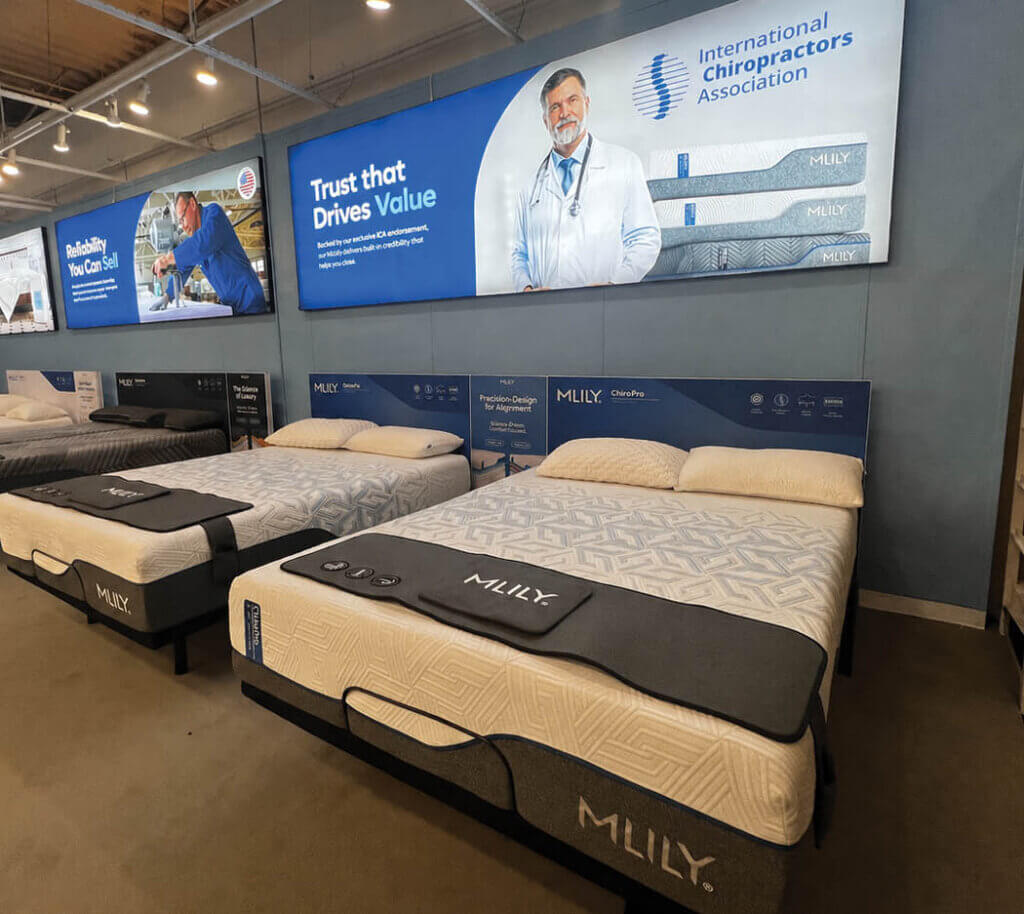
MLILY’s recently updated pillow assortment that includes refreshed covers and shoulder cutout options directly addresses consumers’ needs for temperature regulation and ergonomic support. Sheets and comforters with cooling materials, breathable construction, and premium fabrics “help extend the comfort experience beyond the mattress itself, while products like toppers and protectors further enhance feel and pressure relief and protect the investment,” Leishman says.
As Keever puts it, nicely displayed sheets, accessories, pads, and protectors remind mattress buyers that they can complete their shopping in the showroom.
“A lot of retailers have accessories, but the ones that display them well and promote them do really well because they can increase sales tickets with those items, whereas those that treat it as an afterthought don’t do well with those products,” he says.
Sweet dreams
Technology isn’t new to showrooms, says Wright, who introduced his SnapLabel QR code-reading system 15 years ago (“You can look it up on YouTube,” he says), but a good deal of technology’s potential is still untapped. In the age of visuals, videos capture shoppers’ attention and tell the story in ways that even cutaways and high-resolution photos can’t.
“People don’t use it as much in the industry as I think we should, because it’s such a great medium, and you could almost simplify the process,” he says. “You could zoom in on what’s going on inside the product that you can’t really show otherwise.”
The tools are there, agrees Schulte. Symphony Sleep’s tech includes QR-enabled point-of-sale videos that bring the storytelling directly to shoppers, demonstrating features and benefits and engaging customers even when RSAs aren’t available.
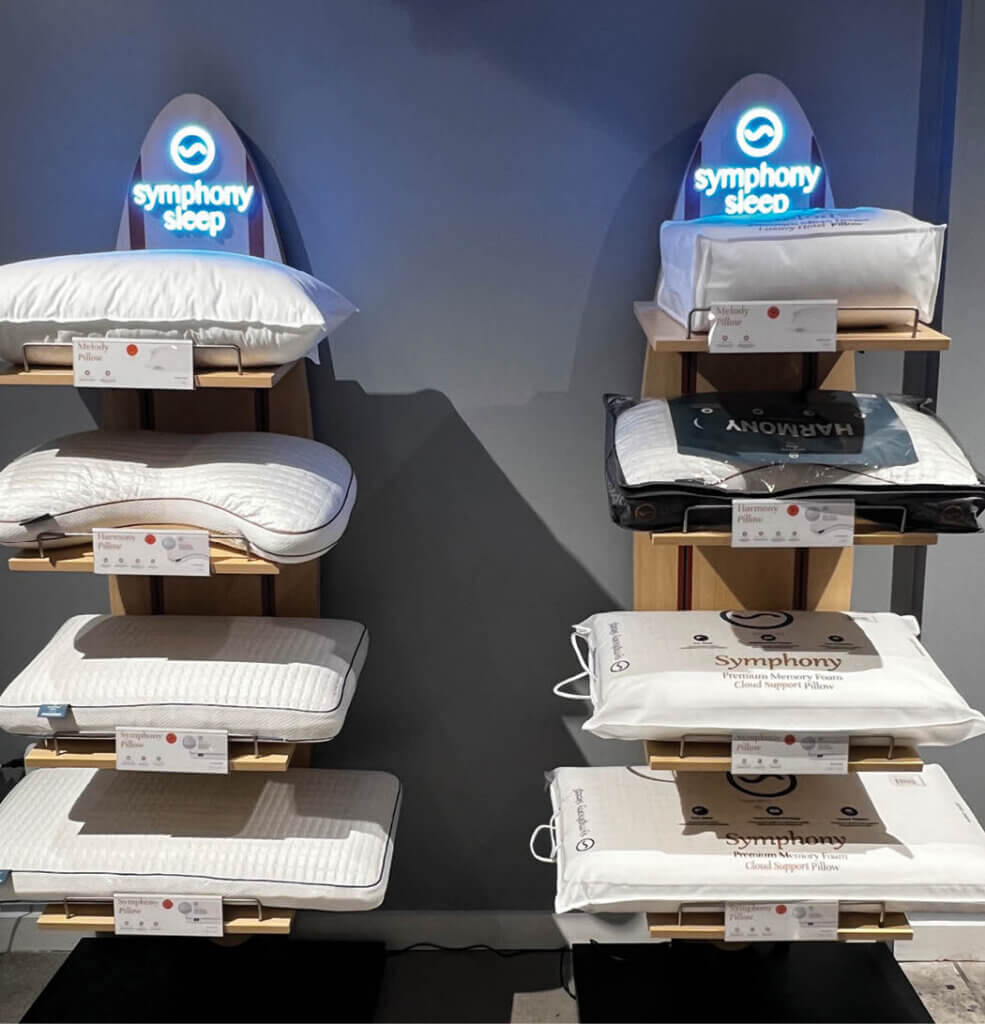
positions, firmness preferences, and price points.
Symphony Sleep also offers artificial intelligence-generated video shorts that combine advanced technology with human storytelling.
“This short-form, engaging content aims to educate consumers on adjustable base functionality and benefits and make the category more approachable for today’s shopper,” Schulte says.
Mathis Home places 85-inch televisions around the showroom to broadcast videos of products and their benefits in action. QR codes link directly to videos that spotlight what the mattresses can do.
“Nobody wants to look at a video of a mattress factory,” says Tramel. “They want to know, ‘Can you help me sleep better?’ ” Videos, he adds, “do a lot of storytelling that’s not told by the RSA, [and] they help set the stage for the conversation with the RSA.”
Good storytelling starts with the timeless reminder that RSAs aren’t trying to just sell mattresses to customers, Tramel emphasizes.
“I am trying to sell you a better sleep,” he says. “That is the difference, and that is, to me, the key to winning in 2026. You’ve got to be genuine. I don’t want to make a sale. I want to make somebody’s life better. And if I do that, I am doing a great thing for my customer.”